

Anthony Barnhart, Ph.D. is a teacher-scholar who aims to inspire intellectual curiosity, nurture skeptical inquiry, and promote rigorous science through his teaching, laboratory research, and public speaking.
News from Prof. Barnhart and the MAGI Lab:
“Mesmerized” @ The White Lilac
Joe Diamond and Anthony Barnhart will present their “Mesmerized” show in two upcoming performances at Kenosha’s White Lilac.
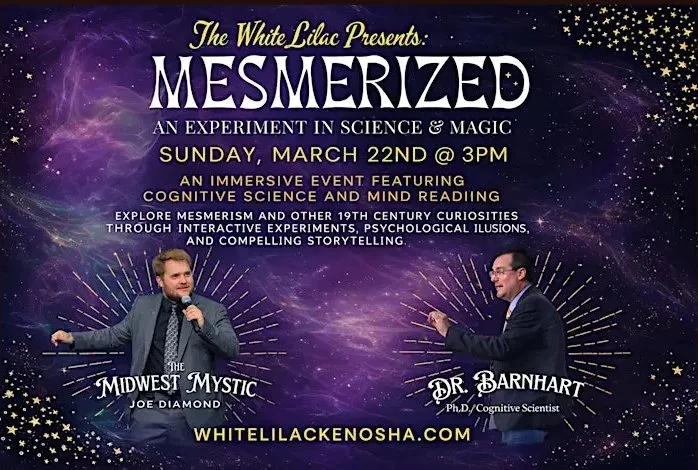
After a successful Mid-Atlantic tour last year, Joe Diamond and I are performing our Mesmerized show for Midwestern audiences at Kenosha, Wisconsin’s White Lilac in the coming months. We’re excited to bring the show to our hometown community in this unique, intimate venue. The term “immersive” gets thrown around a lot these days, but attendees at this performance will experience what it was like to sit in on a 19th Century demonstration of Mesmerism. No hypnosis involved; just plain old suggestion and psychological nudging. Attendees will also hear the untold story of how psychology emerged as a response to these early pseudosciences.
Tickets and more details are available here.
03/11/2026 Update: We’ve added a second date! We’ll be performing Mesmerized at the White Lilac again on April 26th. Tickets at https://www.eventbrite.com/e/mesmerized-an-experiment-in-science-magic-april-26-tickets-1984909229939.
03/18/2026 Update: Joe and I appeared on the WGTD Morning Show to promote our White Lilac appearances. We had a rich conversation with host, Gregory Berg. You can listen to the playback here: https://www.wgtd.org/playlist/morning-show/ms-magicians-tony-barnhart-and-joe-diamond
Mid-Atlantic Performance & Lecture Tour
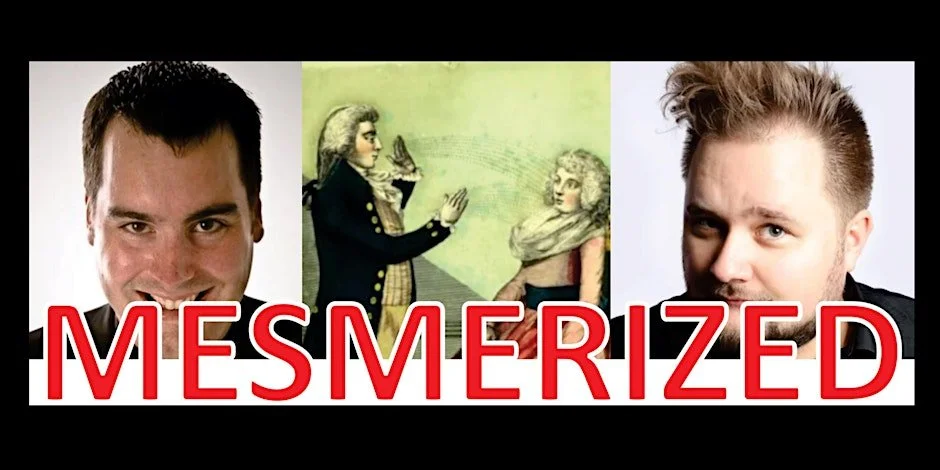
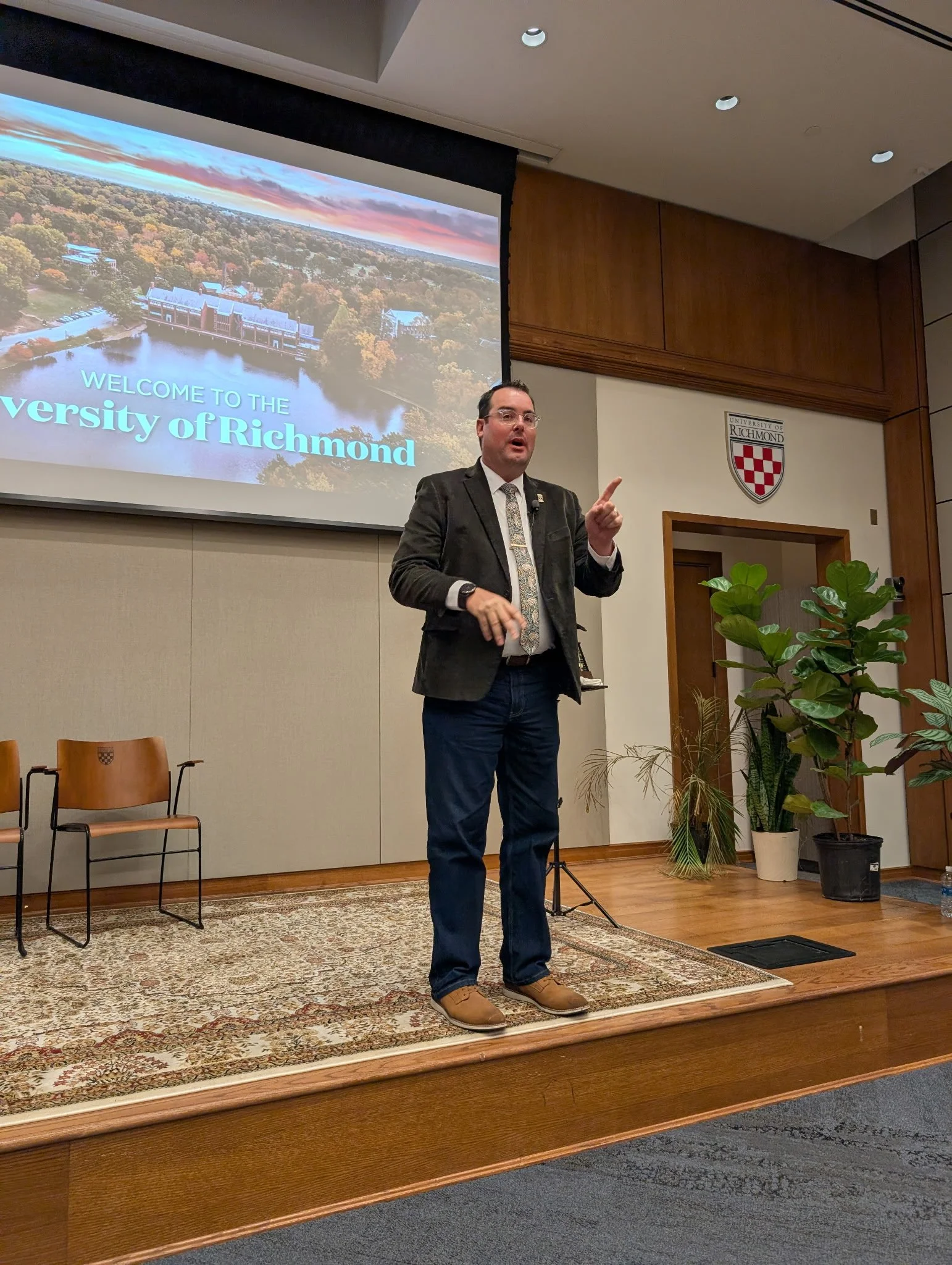
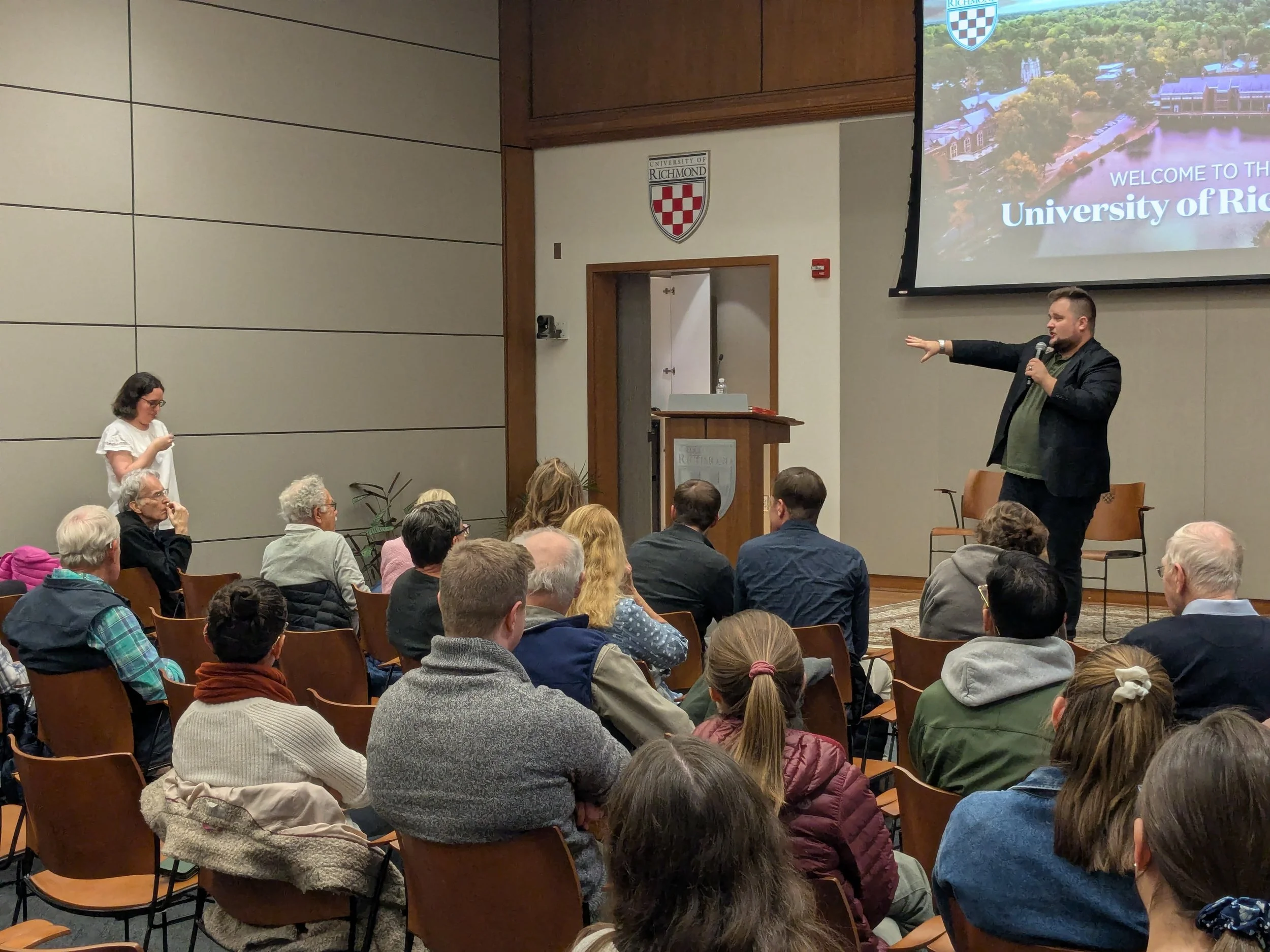
It’s official! Joe Diamond and I will be bringing science and magic to the Mid-Atlantic region in mid-November. Between November 10th and 16th, we’ll be performing our two-man show, Mesmerized, at Johns Hopkins University, the University of Richmond, and for a ticketed event hosted by the National Capital Area Skeptics in Washington, D.C. I’ll also be giving colloquium talks on my research program along the way. You can find details about the events that are open to the public on my Speaking Engagements page.
While the schedule for our tour is tight, we’re hoping to find time to meet up with magicians and magic scholars in the region along the way. Please reach out to us! Hope to see you on the East Coast.
11/05/2025 Update: Joe and I participated in a livestream to promote our public show in Washington, D.C. You can watch the playback on the livestream below!
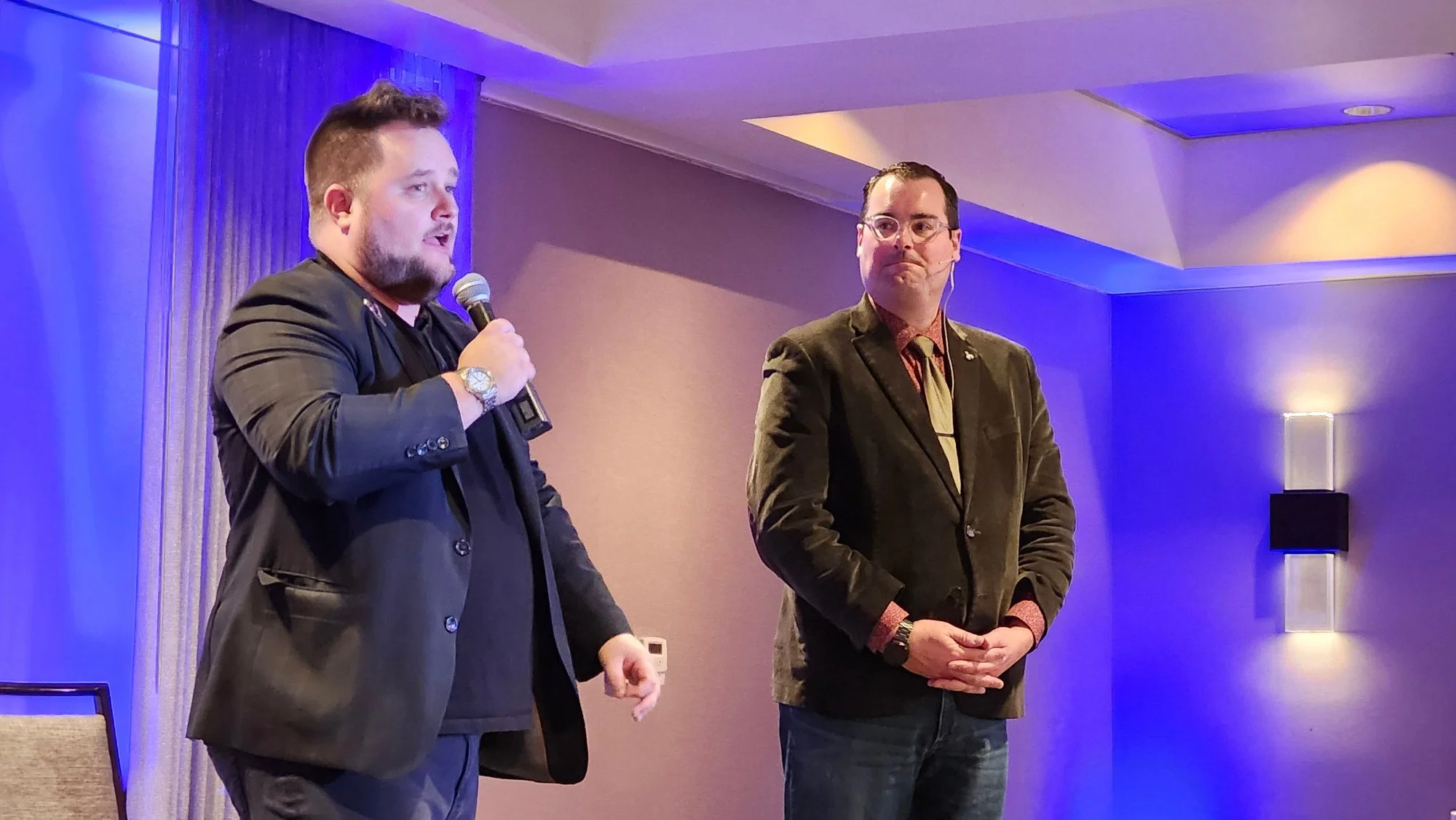
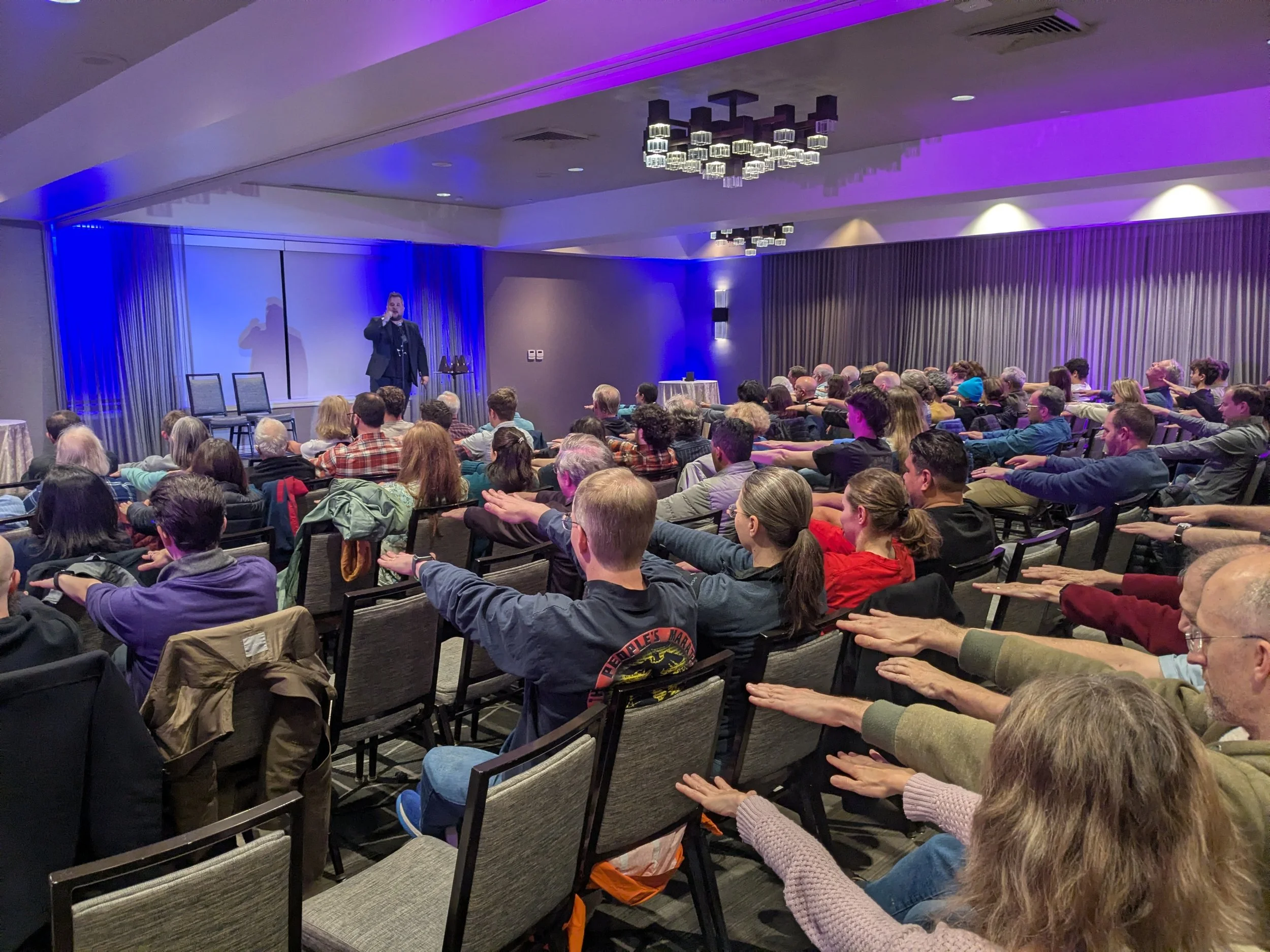
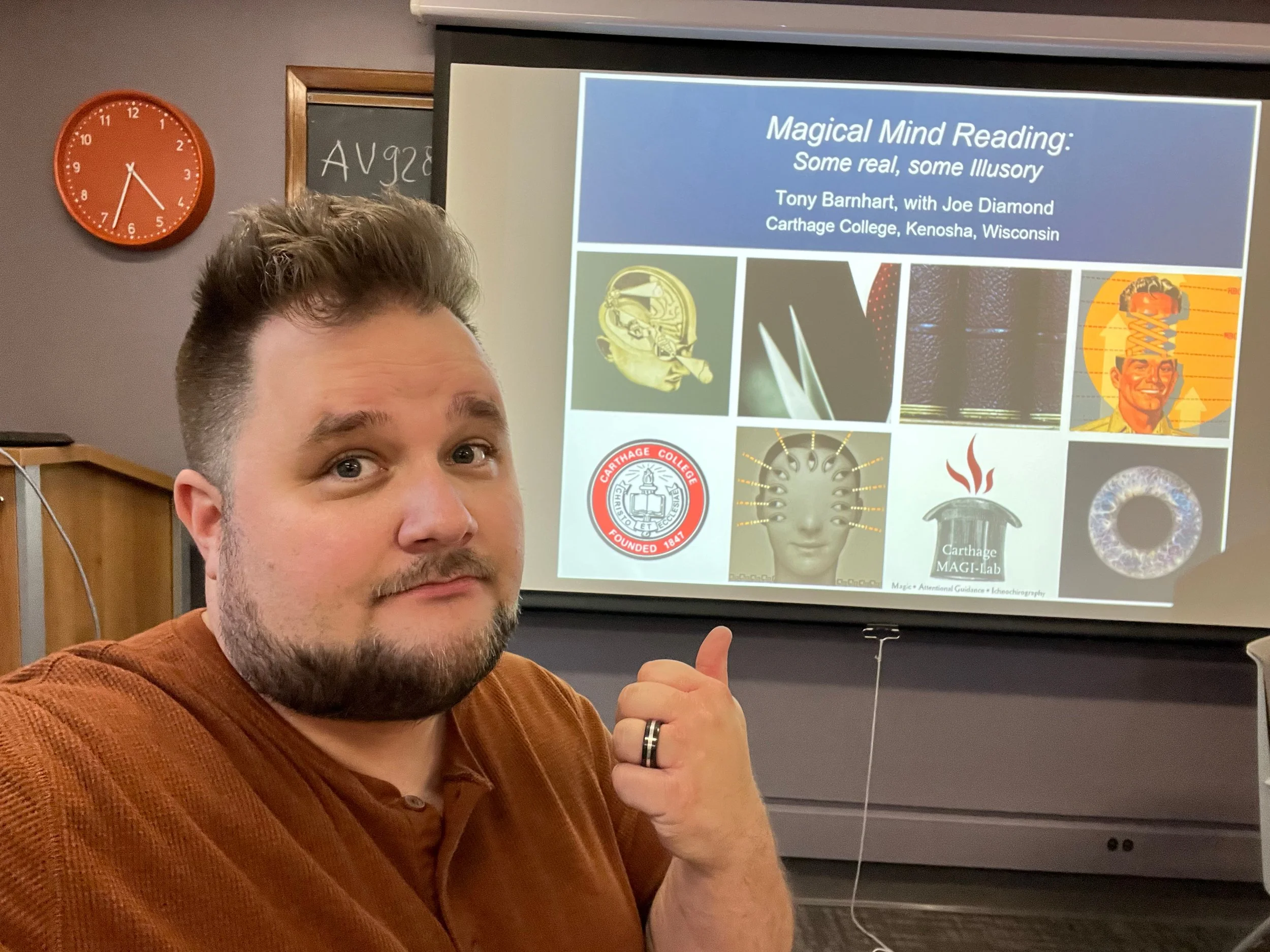
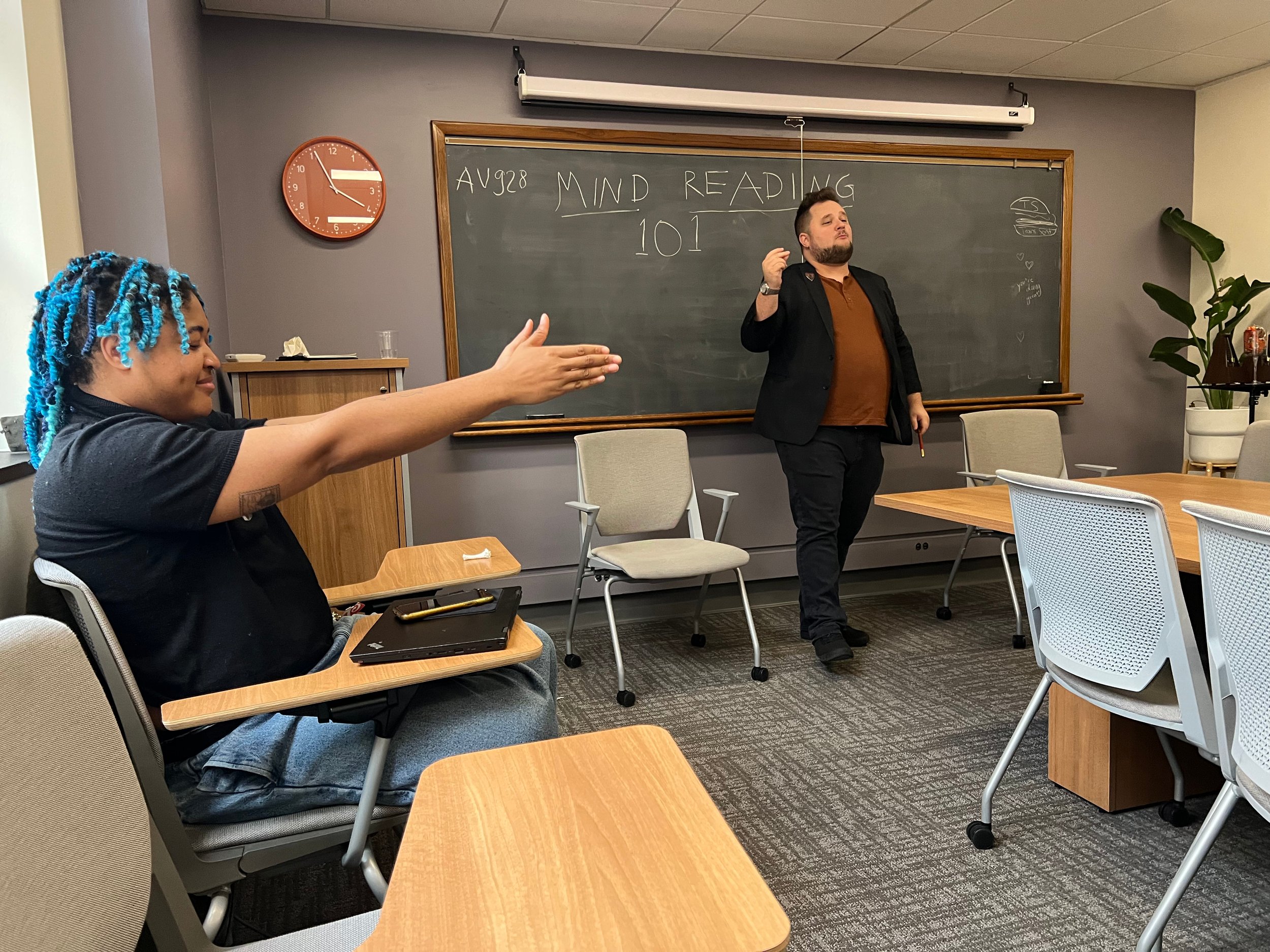
11/25/2025 Update: The tour was a success and a whirlwind! Thanks to all those who were involved with bringing us to the East Coast. Here is a photo album from our exploits.




“Engaging Psychology Students and Promoting Learning through Magic”

In October, the Society for the Teaching of Psychology Annual Conference on Teaching will host a symposium on magic in the classroom. I am pleased to team up with Emily Stark of Minnesota State University Mankato and Jacob Gibson of Washington and Lee University to demonstrate some of the ways that magic can serve as a tool to promote engagement and learning. Here’s what you can expect:
Critical thinking skills are central to the discipline of psychology and are expected of students in a variety of college programs. The APA Guidelines for the Undergraduate Psychology Major (APA, 2013) include critical thinking as a broad goal, with specific skills of demonstrating psychology information literacy, using scientific reasoning, problem-solving, and research design. Numerous activities have been developed and used in psychology courses that give students an opportunity to apply critical thinking to understanding psychological concepts. This symposium will highlight people affiliated with the Science of Magic Association (SoMA) who have incorporated elements of magic and magic tricks to encourage critical thinking or support the teaching of psychology. Magic provides a perfect opportunity for students to examine their own assumptions about a situation and to realize how easily their assumptions, perceptions, and expectations can be manipulated by a skilled magician. Magic tricks exploit automatic assumptions and heuristics that allow for quick decisions in the natural world. As such, they can be a powerful tool for exemplifying the fallibility of cognitive systems and encouraging students to engage in skeptical, critical thought. Symposium participants will discuss the ways they have used magic in their specific courses, including recommendations for other instructors. All presenters have found that magic tricks engage students beyond many other types of course activities and are a unique window into understanding human perception and belief.
Be sure to say hello if you’ll be joining us in the Twin Cities!
UPDATE: I’ll also be lecturing for the Twin Cities Assembly of the Society of American Magicians while I’m in town. Magicians: I hope you’ll join me at Eagle Magic on Friday, October 17th! https://www.sam12.org/civicrm/event/info/?reset=1&id=111